AI interprets
Unstructured answers, likely steps, focused follow-ups and assistance patterns.
Independent product · Human-centered AI workflow design · 2026
See the work clearly before deciding where AI belongs.
The problem
Teams are under pressure to apply AI, but their workflows are often informal, cross-functional and only partially documented. One stakeholder may describe the official process instead of the real one. Hidden exceptions, unstable handoffs and duplicated work must become visible before a responsible recommendation is possible.
How it works
Each stage earns the next. Analysis remains locked until the map contains verified work and the timing needed for honest estimates.
Define the trigger, outcome, workflow areas and business goal.
Turn an interview into editable steps with owners and timing.
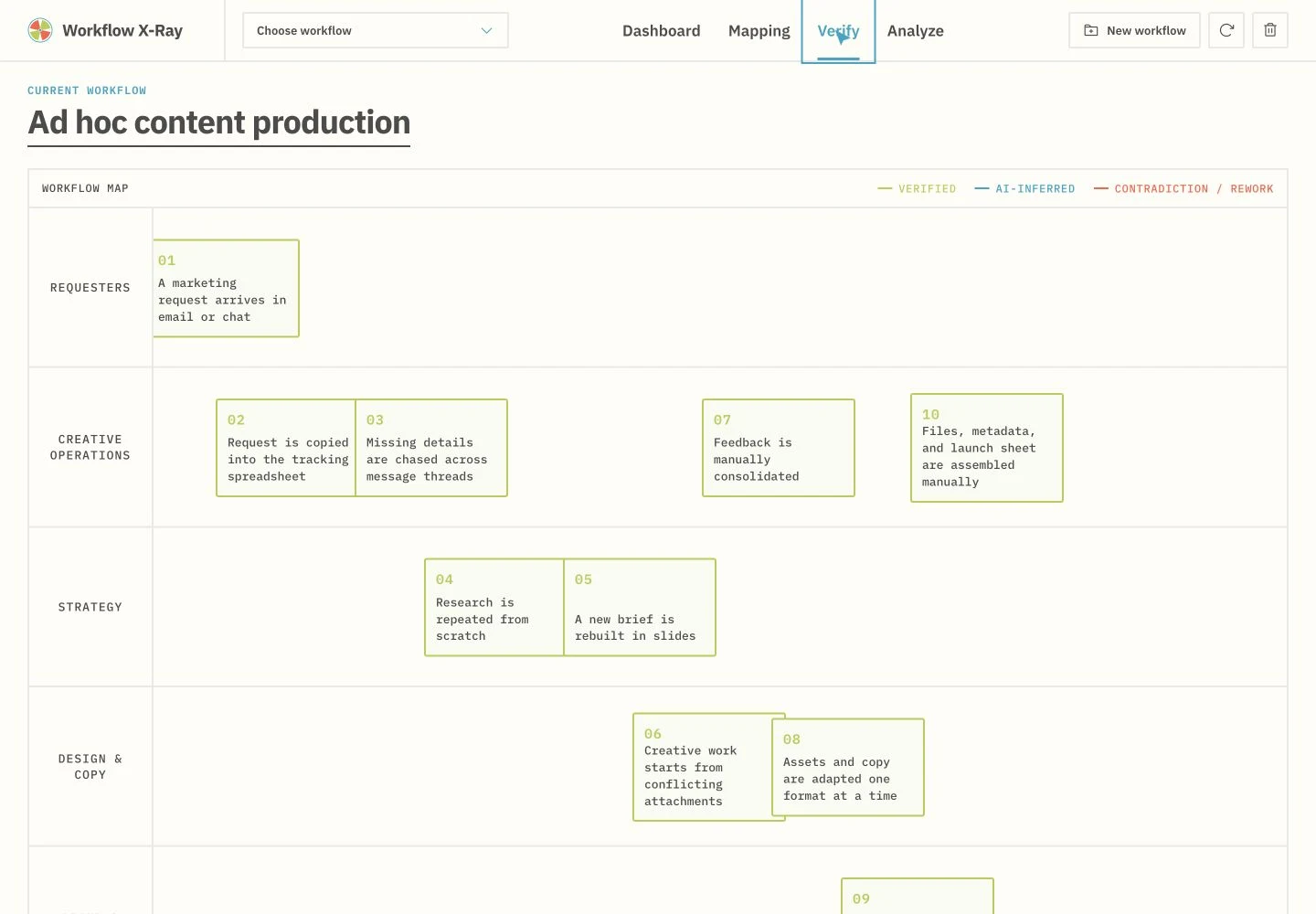
Confirm the real sequence and correct anything AI inferred.
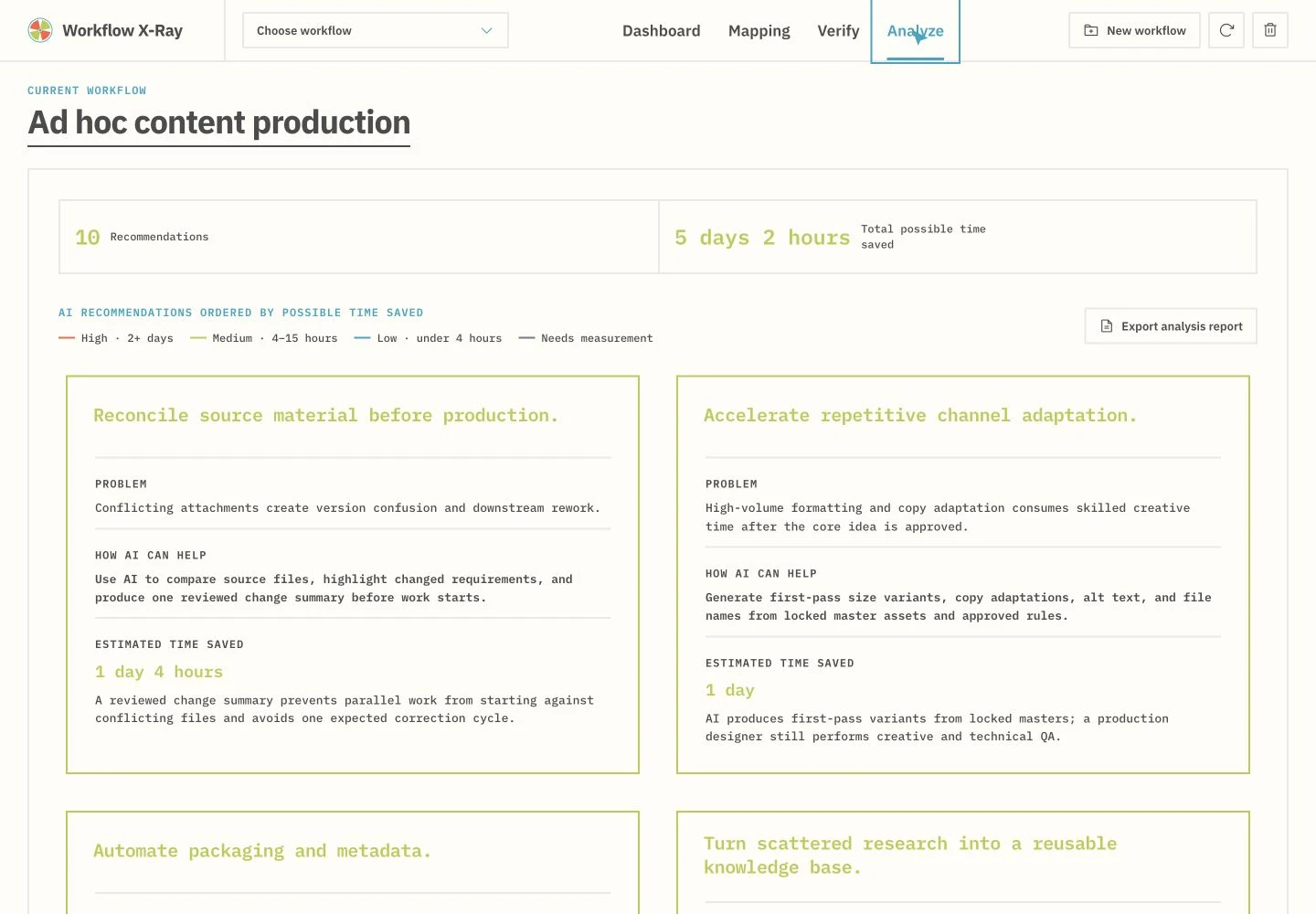
Rank opportunities by defensible active-work time saved.
The hard interaction
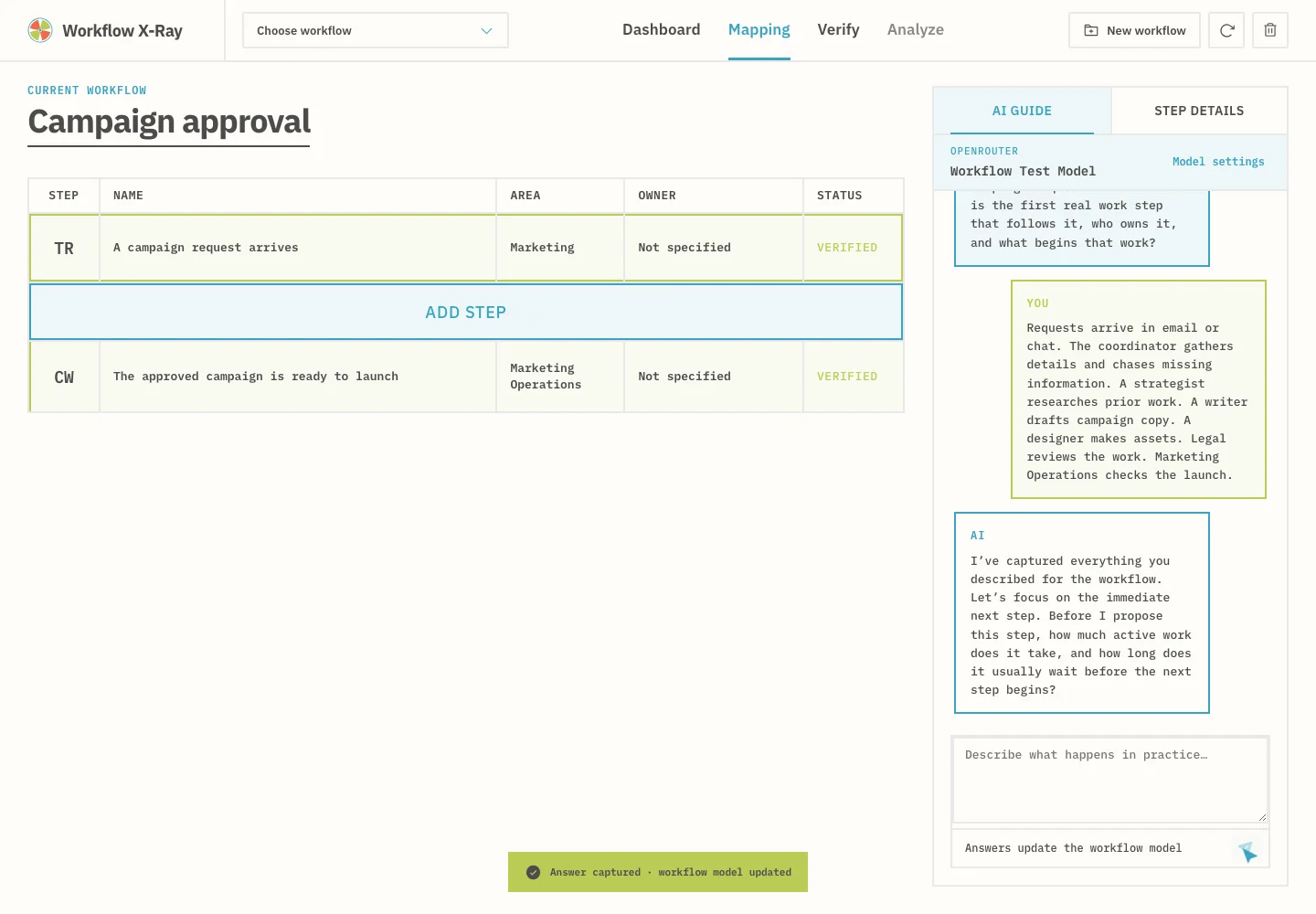
A long narrative can contain the full sequence and still leave crucial facts unresolved. The Guide retains that context, returns attention to the earliest unfinished step and writes each answer into an editable record instead of treating conversation as truth.
Design evolution
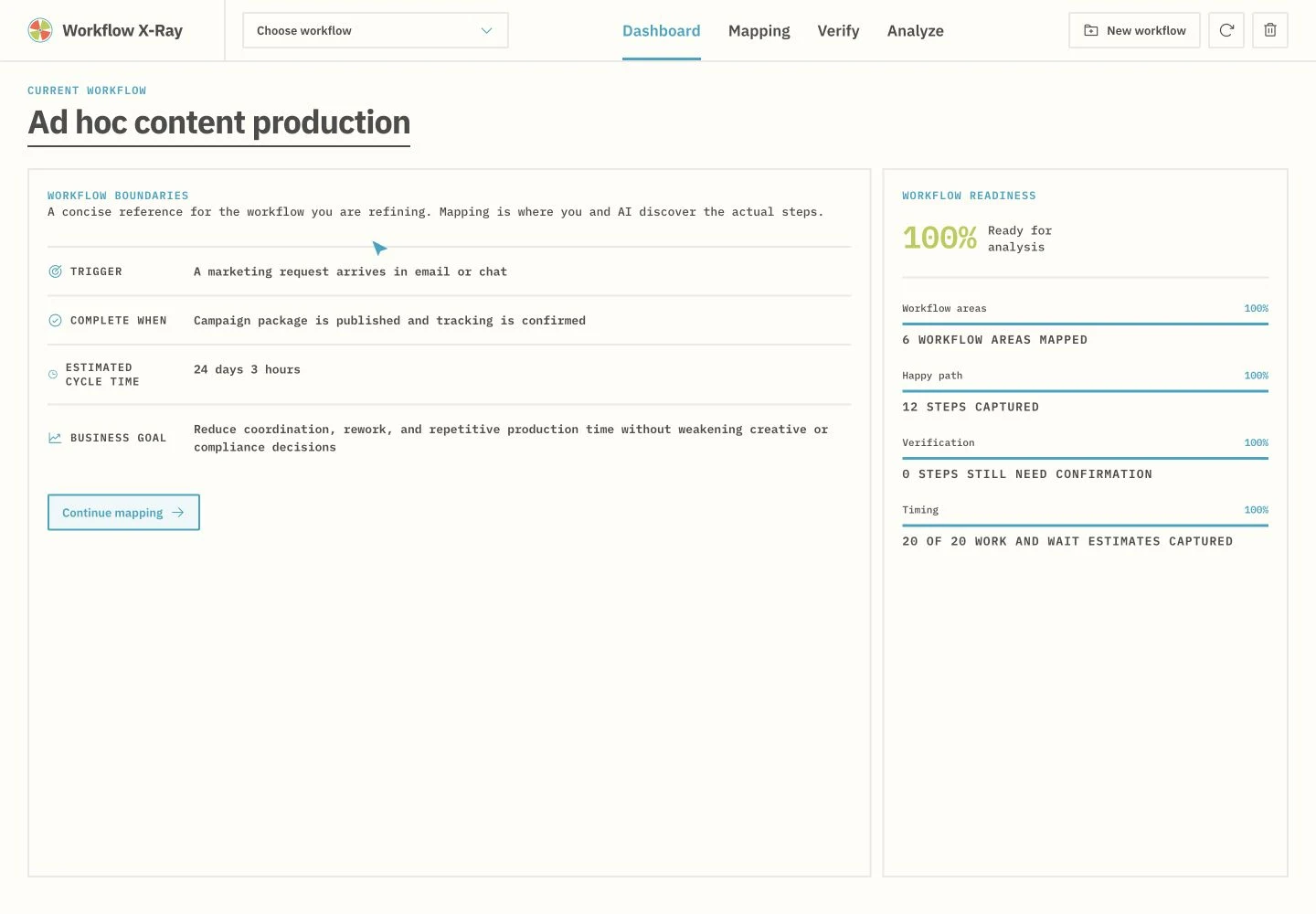
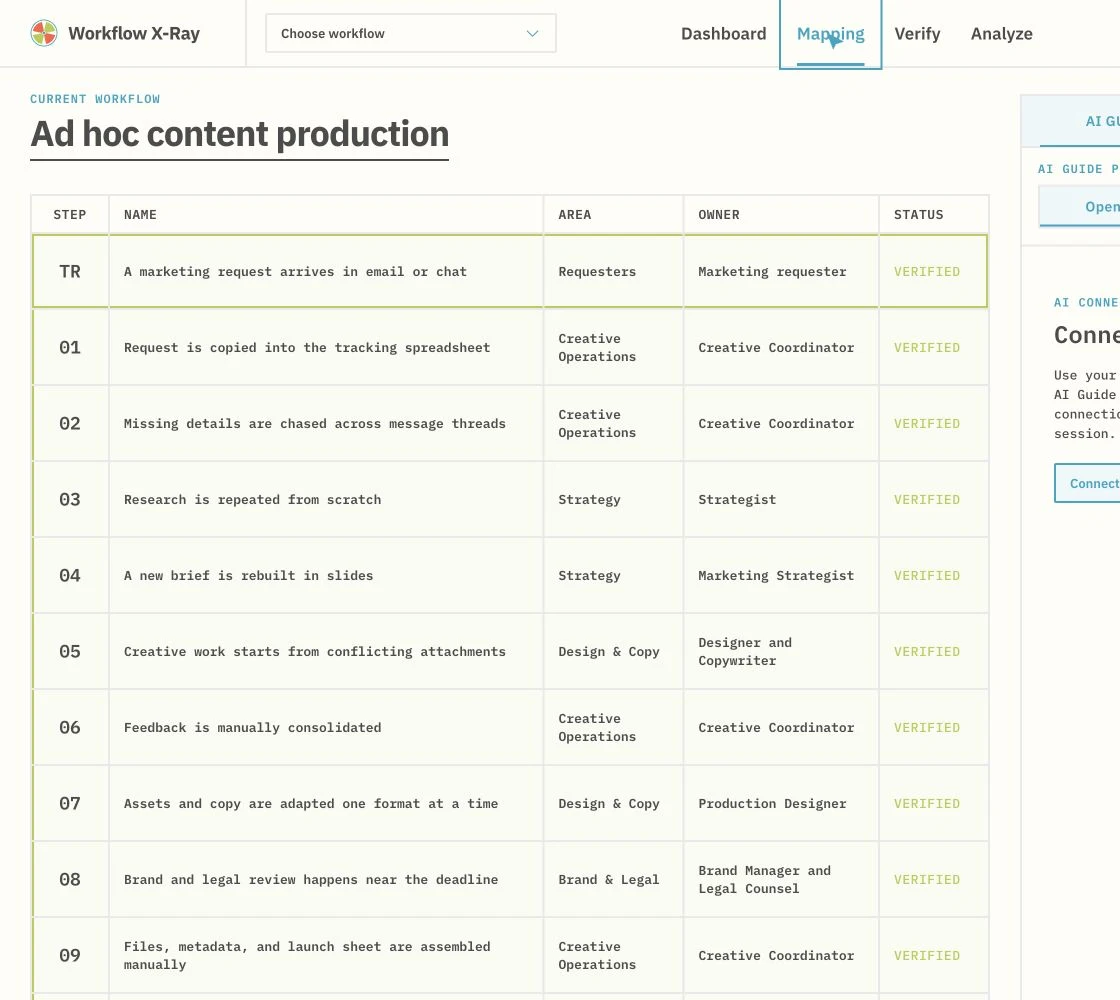
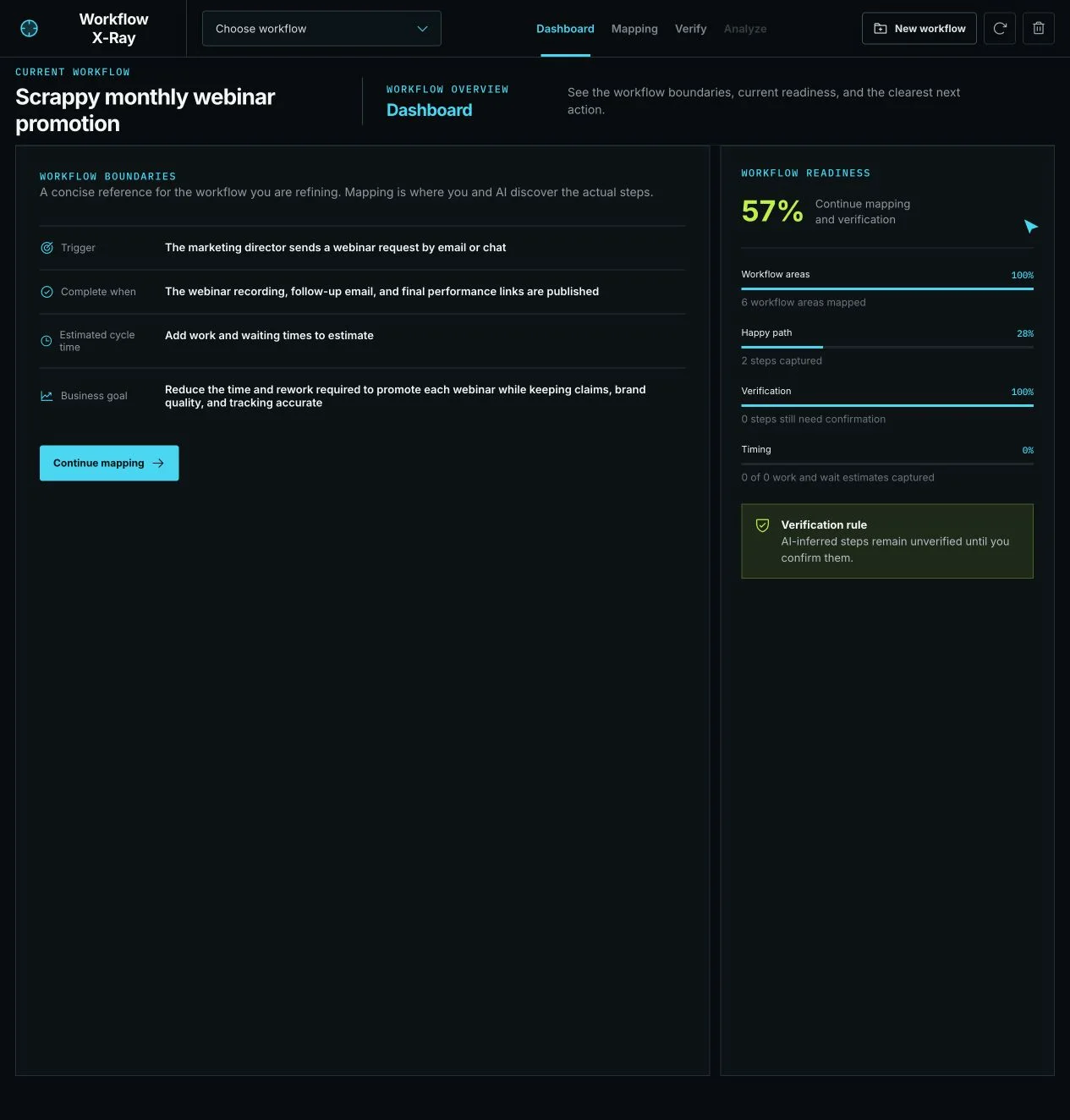
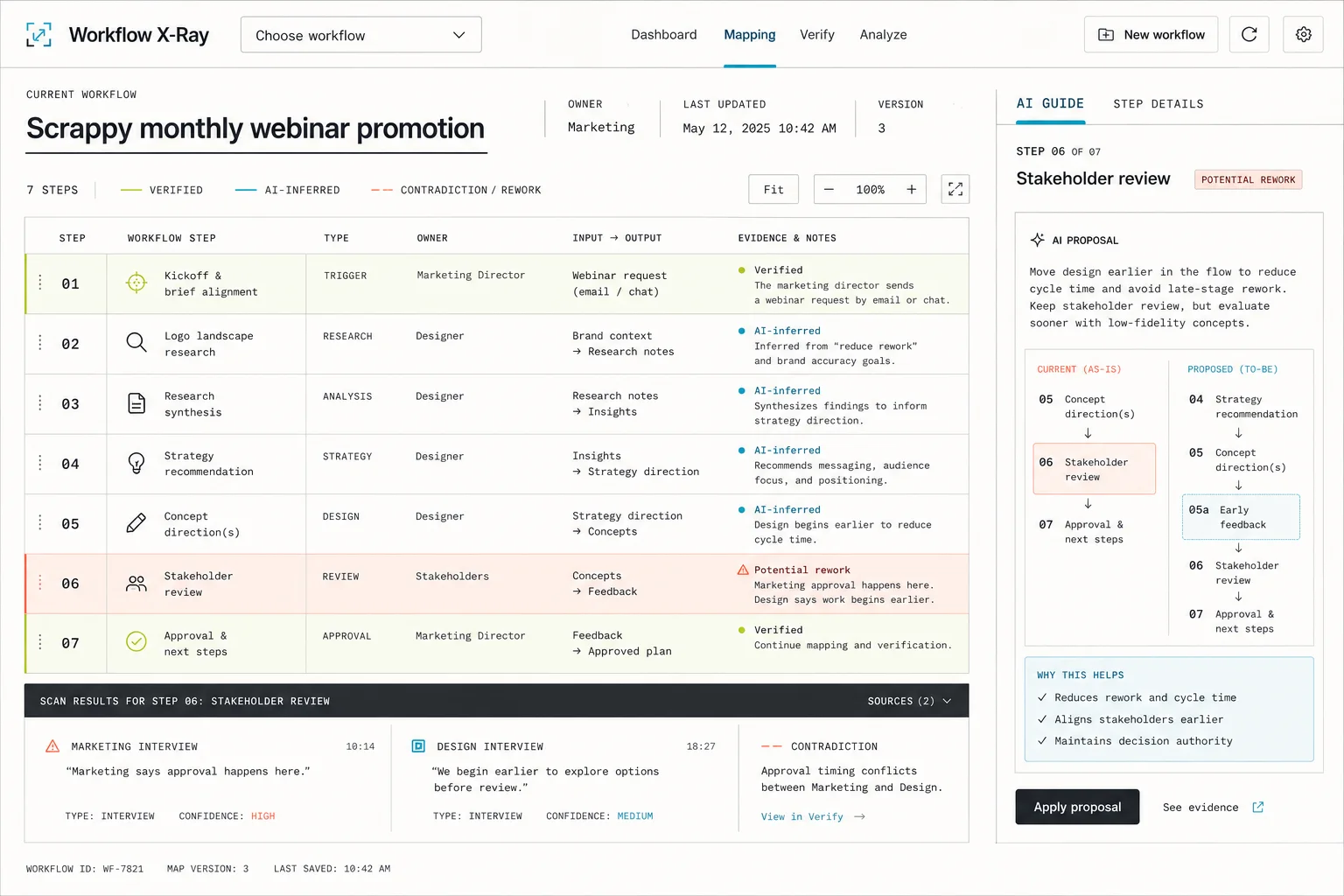
The first direction established a strong technical tone, but dense chrome competed with the workflow evidence. The selected direction kept the same information architecture while giving labels, comparison states and long records more room to breathe.
Proof, not promise
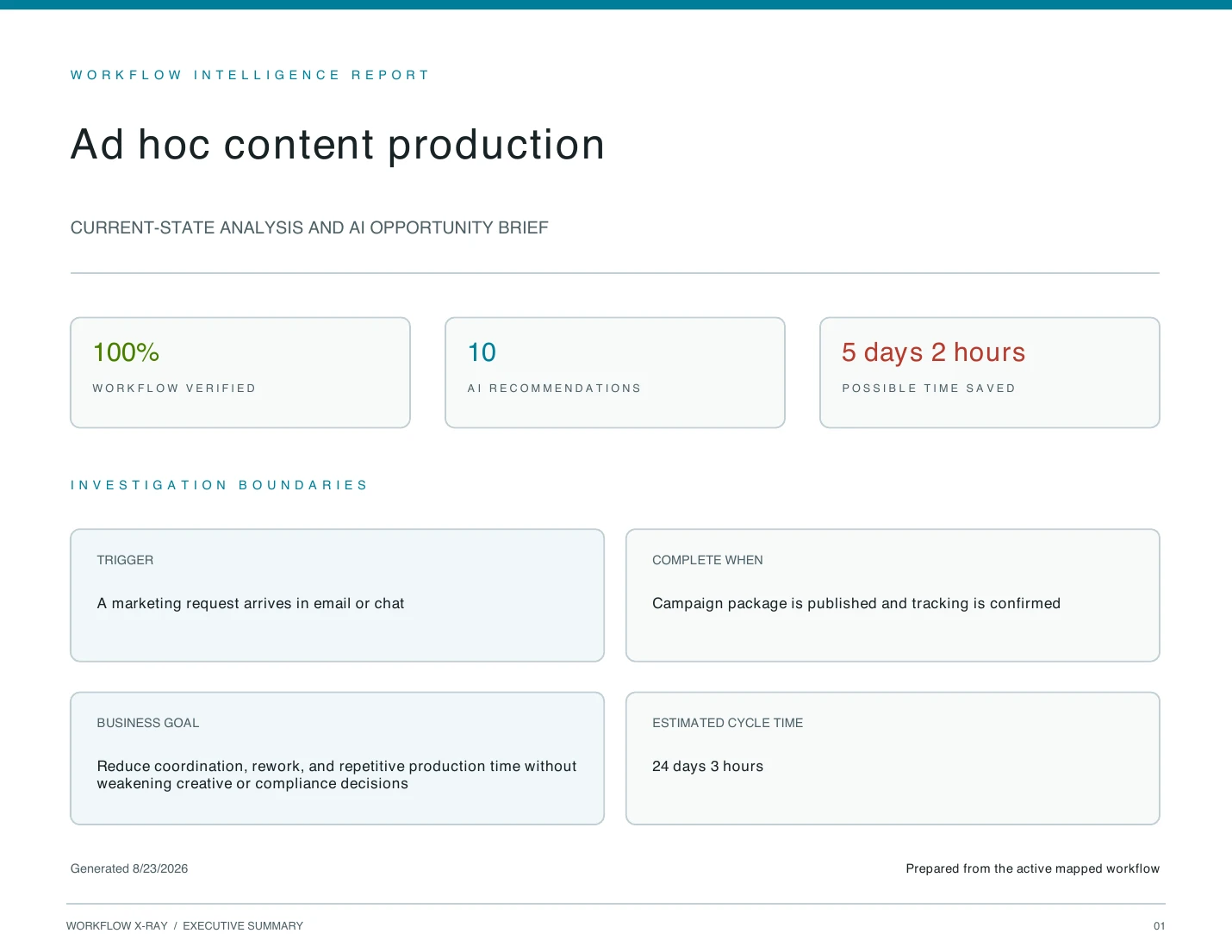
The complete content-production workflow provides one continuous example from verified sequence to ranked findings and a shareable report.
Unstructured answers, likely steps, focused follow-ups and assistance patterns.
Editable records, completeness rules, verification gates and transparent calculations.
What is factual, what needs correction and what must remain human-led.
What the prototype proves
The prototype connects to qualified OpenRouter and DeepSeek model paths, persists editable workflows, gates analysis, calculates estimates from user-entered active time and exports a print-ready report.
Actual adoption and realized savings remain future pilot measures. The current evidence is the working product, retained decisions and repeatable unit and browser coverage.